



Appfire
Senior motion designer
AI-accelerated motion workflow for product launches
The challenge
Traditional video production was too slow to support the simultaneous launch of two key AI-assisted products from the Appfire portfolio. The objective was to deliver high-fidelity UI animations across multiple sets and variants, adaptable for Atlassian Marketplace videos, Google Demand Gen ads, and paid LinkedIn campaigns. Relying on manual keyframing was structurally inefficient and created immediate operational bottlenecks at scale.
The solution
I engineered a hybrid workflow combining Figma Motion and After Effects to bypass manual production delays. By structuring UI micro-animations with an agent-assisted approach in Figma Motion and building modular templates, I removed the need to keyframe repetitive operations across static product layouts. I assembled and finalized the composition in After Effects, deploying advanced expressions and MOGRTs to lock everything in place. This approach established a reusable pipeline for any future product video. By executing UI micro-animations directly in Figma and embedding those lossless sequences into the After Effects master timeline, I reduced overall production time by approximately 70%.
Appfire
Senior motion designer
Brand narrative in motion
The challenge
The objective was to combine company values, product context, and corporate achievements into a single motion piece without cluttering the narrative. Execution required strict adherence to Appfire’s brand guidelines while elevating the overall motion language to the standard of an enterprise tech leader.
The solution
I structured the video around a spatially dynamic layout to manage the high density of information. By combining precise camera work with vector shape path keyframing, I established a rhythm that naturally guided viewers through complex context layers. To anchor the entire composition, I used Figma Weave to generate a sequence of a glassmorphic Appfire logo rotating in space.
Appfire
Senior designer
Premium visual identity for product solutions
The challenge
Previous visual representations of the solution bundles were too abstract, leaving users disconnected from the actual software. The objective was to activate interface elements without relying on completely literal UI mockups that would clutter layouts and overwhelm core messaging. This required a visual system that would successfully blend abstraction with UI context and the product's ultimate value.
The solution
By analyzing core product mechanics with the tech comms team, I extracted key features of the selected products and nested them within a system of floating glass frames. I incorporated dynamic lighting by generating sequences of light beams in Figma Weave to establish depth behind the glass surfaces. By organizing complex data into stylized panels within a dark environment, I created a highly reusable visual framework that was later scaled across various marketing materials, including decks, battlecards, one-pagers, guides, LinkedIn ads, and website hero sections.


Appfire
Senior motion designer
AI-accelerated motion pipelines for product launches
The challenge
Traditional motion design workflows created significant bottlenecks during simultaneous product releases within the Atlassian ecosystem. The objective was to deliver conversion-focused promotional assets without compromising on premium visual effects, UI fidelity, or precise audio sync. Relying on a standard, linear video production model was structurally inefficient and simply too slow to support this scale.
The solution
I engineered a high-velocity, hybrid motion pipeline combining Figma, generative AI, and After Effects. I built the structural interface animations directly within Figma, utilizing AI workflows to rapidly generate modular assets. These components were then assembled in After Effects for final high-end compositing – integrating advanced visual effects and dynamic transitions. This scalable architecture drastically reduced production time and established a new operational template for the entire creative team.
Appfire
Senior motion designer
Appfire corporate video
The challenge
Synthesizing people, product context, company culture, and corporate achievements into a single video traditionally results in a bloated, unfocused montage. The objective here was to bypass that generic format and engineer a premium, high-tempo visual narrative. The execution demanded strict compliance with existing Appfire brand guidelines while fundamentally repositioning the company as the definitive technological leader and the primary driver of industry innovation.
The solution
I abandoned standard corporate transitions in favor of a spatially dynamic, cinematic architecture. By employing advanced shape and frame animation techniques, I used light and motion as structural tools to visually frame Appfire as the focal point of the industry. This controlled pacing ensured that heavy contextual information—such as internal culture and technical achievements—was delivered efficiently without sacrificing the modern, razor-sharp aesthetic required by the brief.
Appfire
Senior designer
Premium visual identity for product solutions
The challenge
Previous visual representations of Appfire solution bundles relied on highly abstract graphics that failed to anchor the user in the actual product context. The challenge was to resolve this disconnect by introducing tangible product details, without creating dense, literal UI mockups that would clutter hero sections and compete with the surrounding marketing collateral.
The solution
I engineered a precise visual compromise by extracting the core functional mechanics of the products and translating them into a highly stylized, premium aesthetic. This approach successfully communicated the software's capabilities while maintaining a lightweight visual footprint. I distilled complex data structures into clean, floating UI panels, providing immediate context for the solution bundles without overwhelming the viewer. To elevate the perceived enterprise value, I designed a dramatic, dark-themed visual environment utilizing glassmorphic surfaces and targeted glow effects, ensuring the assets seamlessly integrate into the high-level marketing architecture.

Appfire
Senior product designer
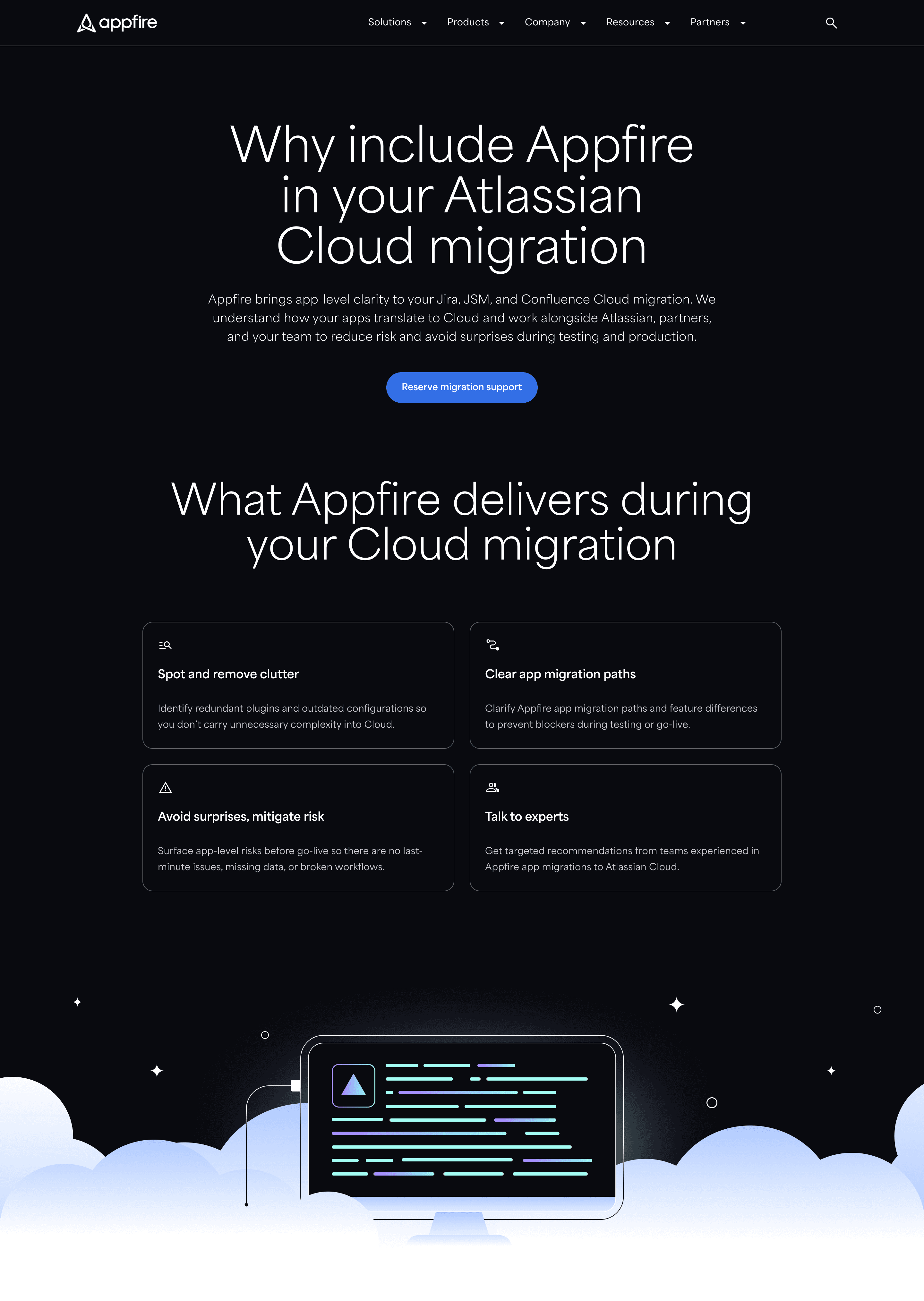
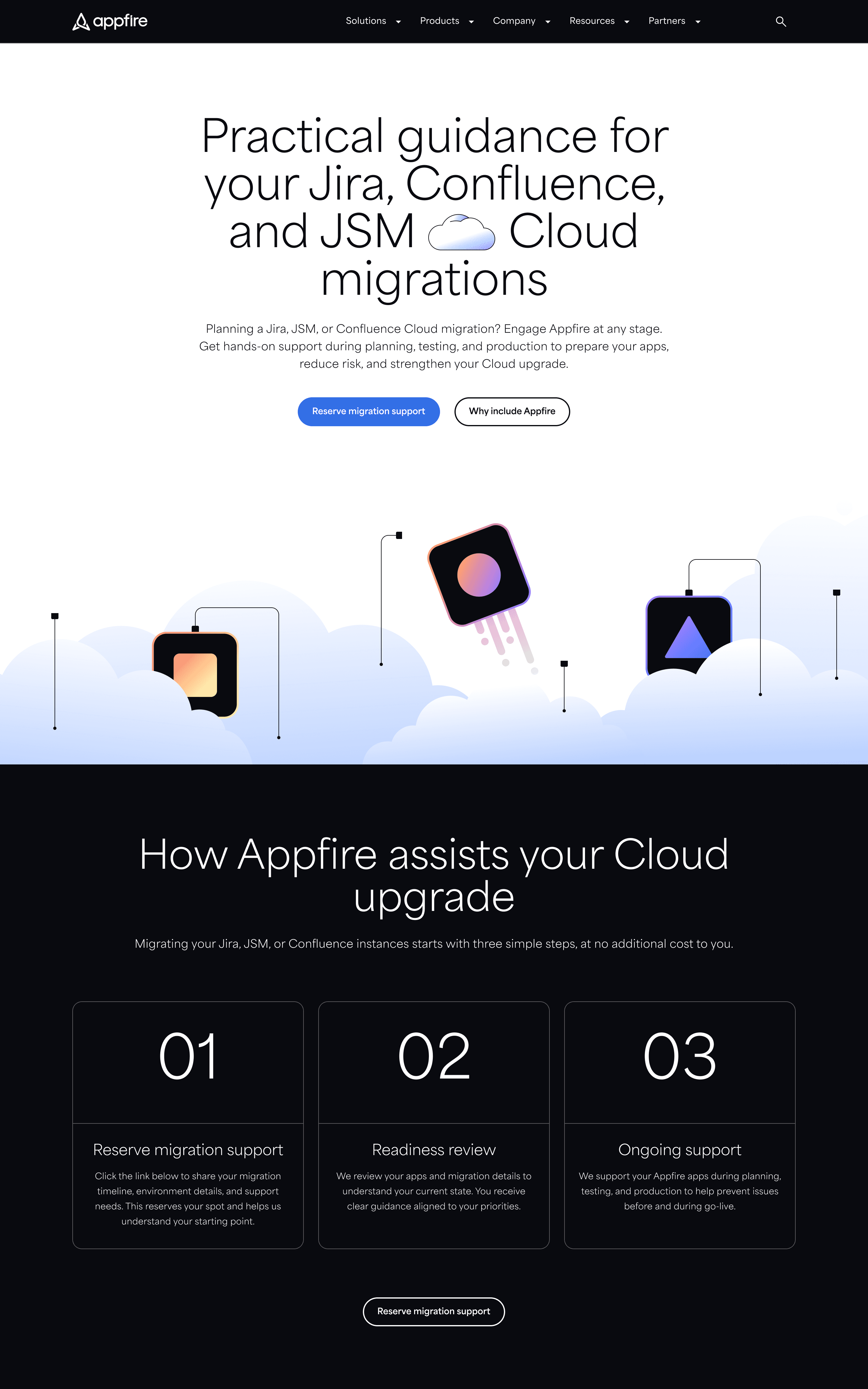
Atlassian cloud migration registration campaign
The challenge
With the entire Atlassian ecosystem moving to the cloud and sunsetting Data Center setups, Appfire faced a critical risk of losing its existing customer base due to friction, poor timing, or inappropriate execution of the migration process. The challenge was to strategically position Appfire as the essential middle layer in this transition, intercepting uncertain users and proving that our proprietary tools were necessary to assess readiness and execute a secure, successful migration.
The solution
I designed a comprehensive, multi-channel campaign architecture that visually positioned Appfire as the definitive migration authority, strictly adhering to complex enterprise brand guidelines while introducing a bespoke, premium aesthetic. I executed a complete suite of assets, centering around a dedicated website migration hub. To drive continuous engagement, I structured a complex email campaign consisting of 15 unique emails distributed across 5 targeted user tracks, visually aligned with a widespread multichannel display ad campaign. Furthermore, I designed a practical app strategy kit — featuring a comprehensive PDF guide, an interactive Excel sheet, and an infographic – transforming abstract migration concepts into tangible, actionable steps for the end user.



Appfire
Design Lead
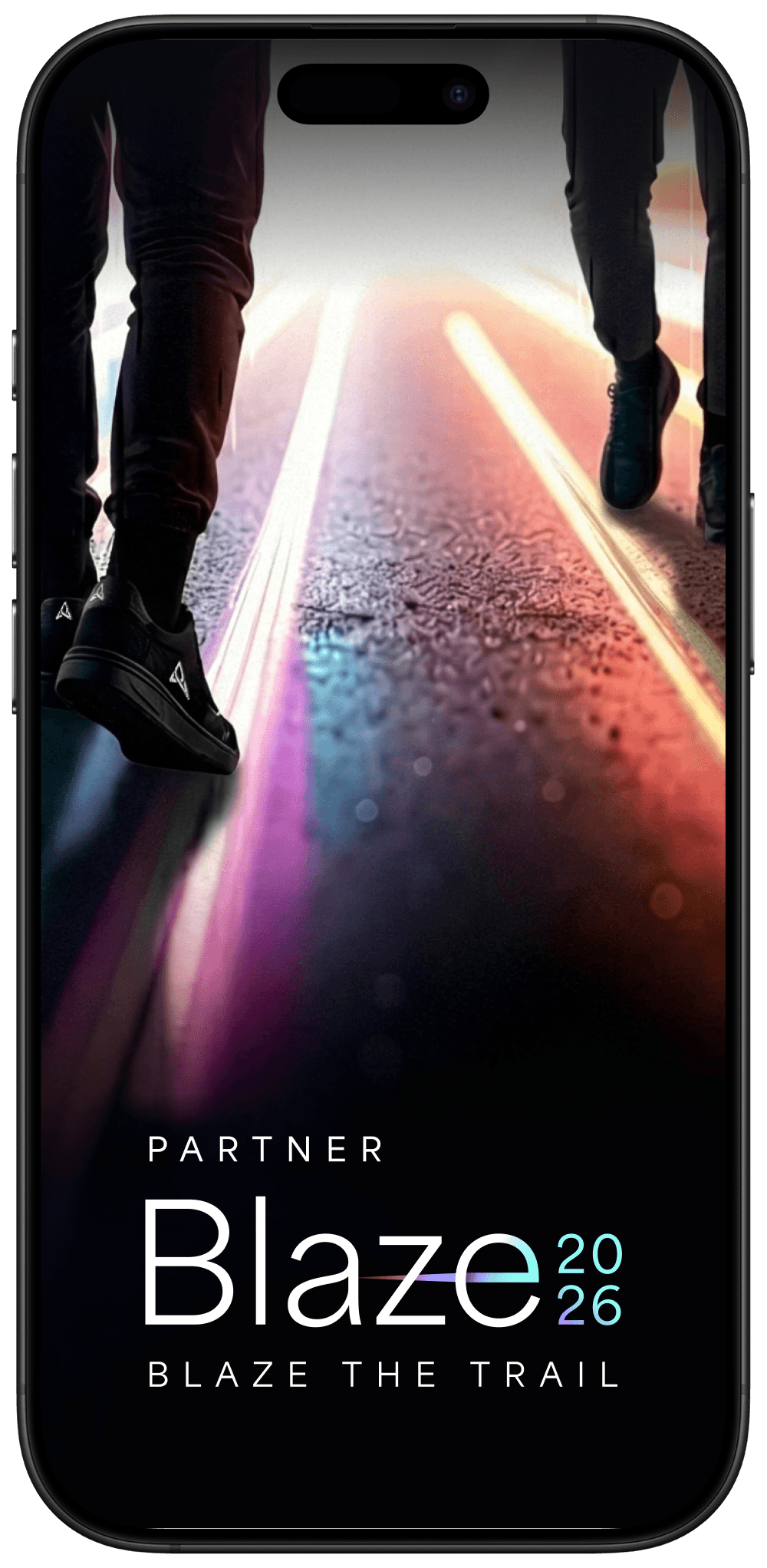
Strategic event branding, AI-driven key art and creative supervision
The challenge
Appfire required a high-impact, enterprise-grade brand narrative to align both global employees and external partners around a major strategic pivot towards the future. The challenge was about executing the "Blaze 2026" theme across a dual-audience event experience under tight deadlines, ensuring brand consistency while visually communicating market leadership and collective forward momentum.
The solution
Driven by a highly optimized iterative process, I architected a hybrid creative pipeline intentionally blending emerging generative AI workflows with rigorous traditional design refinement. This approach successfully accelerated visual ideation and delivered the cohesive "Blaze the trail" brand identity, uniting global stakeholders across a high-volume, multi-platform physical and digital event experience. I directed the end-to-end visual lifecycle from initial conceptual iterations into full production, seamlessly adapting the core narrative across digital touchpoints and extensive environmental print. Additionally, I guided motion design for the event's high-impact animated opener, uniquely leveraging AI tools to establish perfect audio timing and flawlessly sync musical cues with the on-screen action.



Hoxby
Senior visual designer
Global visual operations
The challenge
Executing high-stakes visual collateral for enterprise clients like Merck, Unilever, and AIA requires strict adherence to rigid, multi-layered brand systems. Within Hoxby’s fully remote, asynchronous operational model, the primary friction was scaling production without introducing quality decay. The work required translating complex corporate guidelines into localized print, event, and digital assets across tight international timeframes, where any misstep in layout, typography, or print preparation caused costly review bottlenecks.
The solution
I developed a modular visual workflow that broke down restrictive brand rulebooks into adaptable, high-efficiency production templates. By establishing strict grid structures, typographic scales, and asset libraries tailored to each corporate account, I streamlined the execution of both digital campaigns and high-spec print materials—such as Merck’s annual gala collateral and Unilever’s regional publications. This approach eliminated visual fragmentation, cut down review cycles, and guaranteed zero-defect delivery under strict asynchronous constraints.


Mielżyński
Lead product designer
AR scanner product design and e-commerce architecture
The challenge
Operating across three premium physical wine bars with a rotating inventory of over 700 wines and no printed menus, the client required a comprehensive digital transformation. The operational bottleneck was conceptualizing an AR wine label scanner and scaling it into a fully integrated omnichannel e-commerce ecosystem.
The solution
Directed a cross-functional team to architect a unified AR and e-commerce ecosystem. By engineering a centralized API infrastructure, I synchronized native applications and the web platform, streamlining the customer journey and automating internal employee workflows.


